Home›Laser Proctology›Anal Fissure
ANAL FISSURE CARE · BORIVALI WEST, MUMBAI

Sharp pain or burning during stools?It could be an anal fissure.

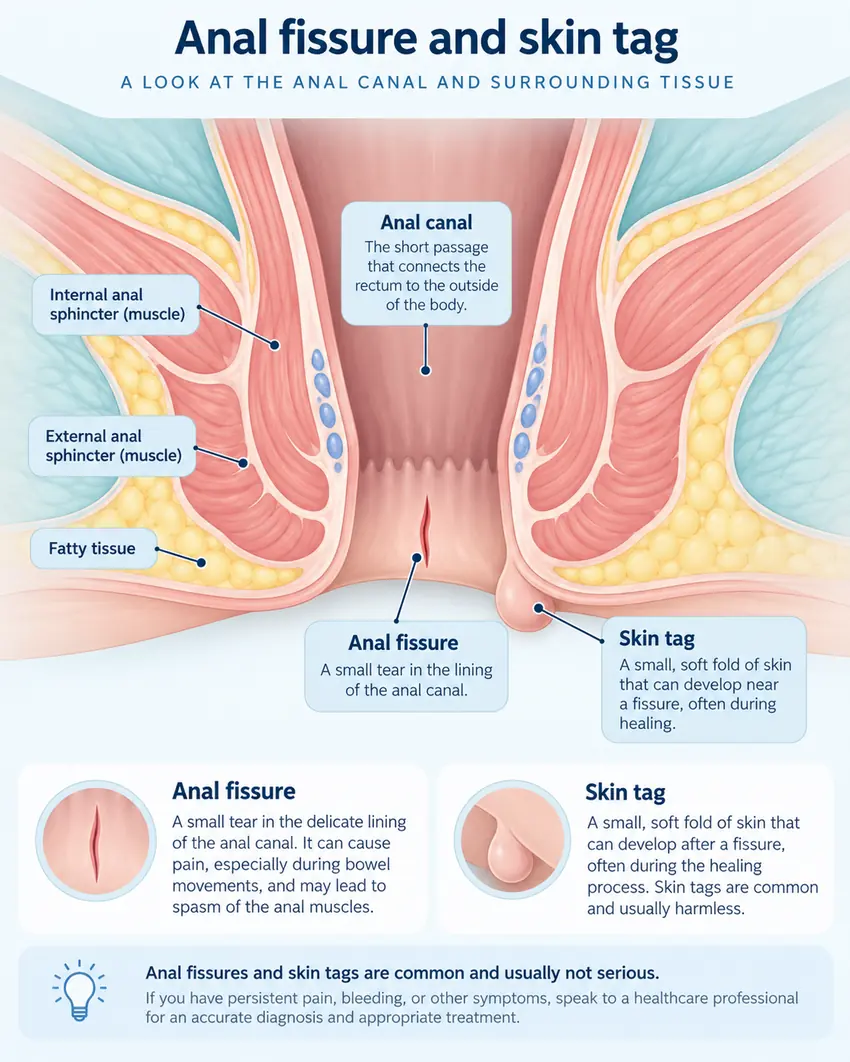
An anal fissure is a small tear in the lining of the anal canal. It can cause sharp pain during bowel movements, burning afterwards, and a little bright-red bleeding. Many fissures heal with stool regulation and medicines—surgery is not always needed.

✓ Respectful assessment✓ Non-surgical care first when suitable✓ Clear treatment choices
Patient-friendly illustration of anal fissure and associated skin tag
Not every case needs surgery.Find the cause of pain before choosing a treatment.

Rectal pain and bleeding should not automatically be called a fissure.

Seek urgent care for heavy or persistent bleeding, fainting, black stools, severe swelling with fever or pus, or severe worsening pain. New or recurring bleeding, anaemia, unexpected weight loss or changes in bowel habits require proper evaluation.

Rectal bleeding guide ↗
RECOGNISE THE SYMPTOMS

What does an anal fissure feel like?

Symptoms often follow a distinct pattern but still need confirmation by examination.

Sharp pain during stools

A cutting, tearing or stinging sensation while passing a bowel movement.

Common symptom

Burning afterwards

Discomfort or spasm may continue for minutes or even hours after passing stools.

Typical pattern

Fresh red blood

Small amounts may be seen on toilet paper or on the stool surface. Other causes must be excluded.

Needs evaluation

Constipation or fear of stools

Hard stools can worsen a tear; avoiding bowel movements can perpetuate the cycle.

Often contributes

Illustrations are simplified for public education; appearances can vary.

THE CONDITION EXPLAINED

What is an anal fissure?

An anal fissure is a small tear or ulcer in the lining near the opening of the anal canal. A hard stool or repeated bowel irritation can trigger it.

1

A tear develops
Hard stools, straining or frequent loose stools can injure the sensitive lining.

2

The muscle tightens
Pain may trigger internal anal sphincter spasm, which can reduce local blood supply.

3

Healing can be delayed
Persistent spasm and repeated trauma can lead to a chronic fissure.

Not sure if it is piles instead? Compare symptoms ↗
WHY DURATION MATTERS

Acute vs chronic anal fissure

How long the fissure has been present and how it looks on examination influence the treatment plan.

RECENT · TYPICALLY UNDER 6 WEEKS

Acute fissure

A newly developed tear, often after a hard stool, with sharp pain or fresh bleeding.

Usual starting pointStool softening, fibre, fluids, warm baths and appropriate symptom relief.
PERSISTENT · OFTEN 6 WEEKS OR LONGER

Chronic fissure

A persistent or recurrent tear, sometimes with a sentinel skin tag, local scarring or significant sphincter spasm.

Next stepsMedical therapy and, in selected refractory cases, injections or surgery.
IMPORTANT IN BOTH TYPES

Prevent repeated injury

Regular, soft bowel movements are central to healing and to reducing recurrence.

Long-term goalComfortable bowel movements without straining or prolonged toilet sitting.
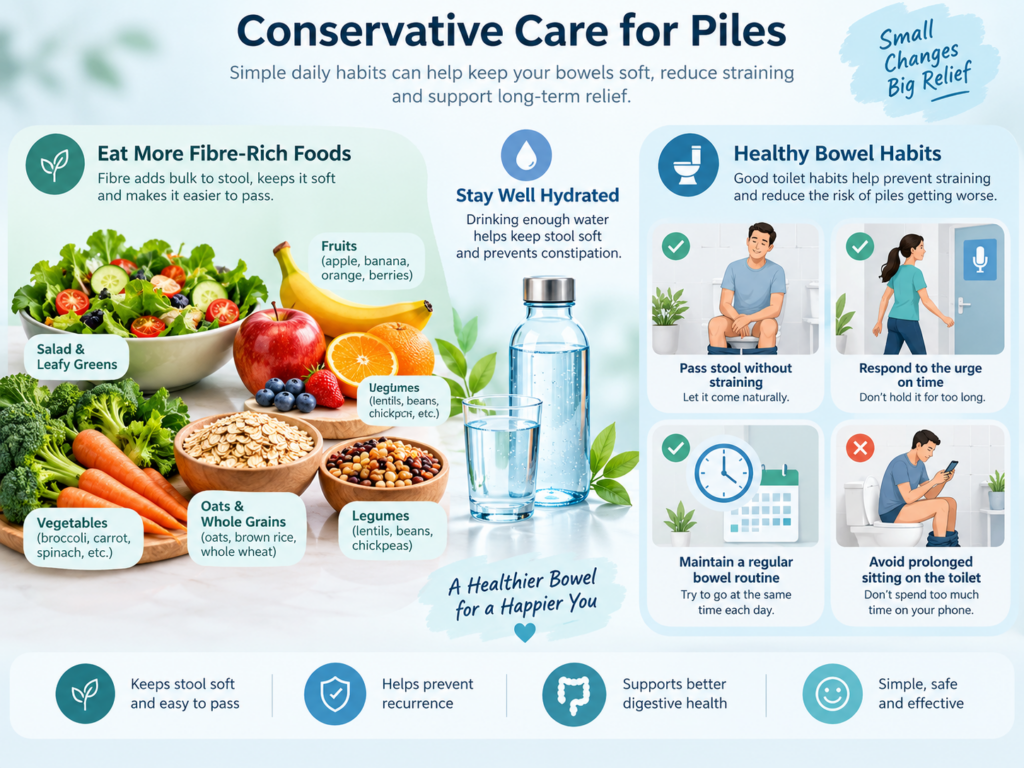
Fibre rich foods, water and warm bath for anal fissure care
FIRST-LINE APPROACH

Can an anal fissure heal without surgery?

Yes—many acute fissures improve with conservative measures. The first aim is to keep stools soft and reduce painful spasm without further injury.

  • Increase dietary fibre gradually and maintain adequate hydration.
  • Use stool-softening medication if your clinician recommends it.
  • Warm shallow sitz baths can soothe discomfort.
  • Avoid straining, prolonged toilet sitting and delaying bowel movements.
  • Use prescribed pain relief or topical medicines correctly.

Seek medical assessment if pain or bleeding is worsening, persists, or repeatedly returns. Self-care does not replace evaluation of unexplained bleeding.

WHEN A FISSURE PERSISTS

Treatment choices after examination

Not all patients need a procedure. The best option depends on chronicity, symptoms, sphincter function and previous treatment.

ApproachWhen consideredWhat it aims to doImportant consideration
Diet, fibre & stool regulationMost acute fissures; ongoing care for chronic fissuresKeep stools soft and prevent repeated traumaMay take consistent daily habits
Prescription topical medicationPersistent symptoms or chronic fissureDiltiazem or nifedipine preparations, or glyceryl trinitrate, may help relax the internal sphincterMedicines need clinician guidance; nitrates may cause headache
Botulinum toxinSelected chronic fissures, often after inadequate response to medicinesTemporarily reduce sphincter spasmResults vary; temporary changes in continence can occur
Lateral internal sphincterotomySelected persistent chronic fissuresReduce sphincter pressure to allow healingPotential continence-related risks need careful assessment
Other / laser-assisted proceduresSelected circumstances after discussionTreat specific tissue when appropriateLaser is not a routine first-line requirement or proven replacement for established therapies
Treatment should preserve function as well as promote healing.

Before surgery, discuss prior childbirth-related injury, previous anorectal surgery, existing continence problems and other relevant conditions with your surgeon.

CONFIRMING THE CAUSE OF PAIN

How is an anal fissure diagnosed?

The examination is guided by your symptoms and comfort. A painful internal examination is not always necessary at the initial visit.

1

Symptoms & medical history

Duration of pain, bleeding, bowel habits, childbirth, previous treatments and relevant medicines.

2

Gentle external inspection

A fissure and a sentinel skin tag may be visible without an uncomfortable examination.

3

Additional examination only if needed

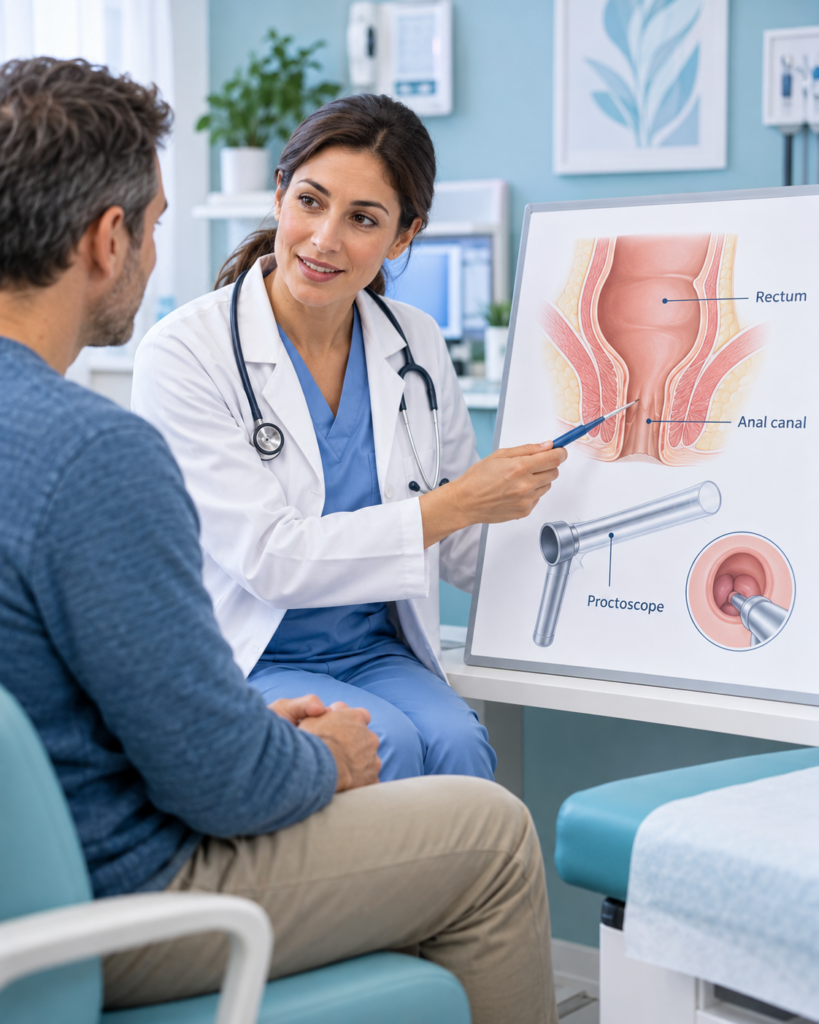
Digital rectal examination or proctoscopy may be deferred when very painful, or considered later if appropriate.

4

Investigate atypical or concerning symptoms

Multiple or unusual fissures, fever, discharge, persistent bleeding or bowel changes may require further tests, including colonoscopy in selected patients.

Doctor explaining anorectal examination to a patient
STAY COMFORTABLE WHILE HEALING

Simple habits that support recovery

Whether treated medically or surgically, avoiding hard stools and straining remains important.

More fibre

Vegetables, fruit, pulses and whole grains can support soft, regular stools.

Adequate fluids

Hydrate appropriately for your health needs, particularly when increasing fibre.

Gentle bowel habits

Go when you feel the urge; avoid excessive straining or long toilet sessions.

Follow-up

Persistent, recurring or atypical symptoms deserve clinical review rather than repeated self-treatment.

Dr Abhinandan Jadhav consultant surgeon in Borivali West Mumbai
YOUR CONSULTANT SURGEON

Dr Abhinandan Jadhav

Consultant Surgeon · Laparoscopic & Bariatric Surgery

MBBS · MS (General Surgery) · FMAS · DMAS · SAGES (USA) · WALS (UK)

Patients with anal pain need a precise diagnosis—not an automatic recommendation for laser treatment or surgery. Management is selected to relieve symptoms, encourage healing and protect sphincter function wherever possible.

✓ Individual evaluation✓ Conservative options where suitable✓ Clear discussion of risks
Consult Dr Jadhav
COMMON PATIENT QUESTIONS

Anal fissure FAQs

Simple answers before your consultation.

What is an anal fissure?

It is a small tear in the lining of the anal canal. It can cause sharp pain with bowel movements, burning afterwards and sometimes a little bright-red blood.

Are piles and anal fissure the same?

No. Piles are enlarged haemorrhoidal cushions, while a fissure is a tear in the lining. Symptoms can overlap, so the cause should be examined.

Can an anal fissure heal without surgery?

Yes. Many new or acute fissures heal with soft stools, fibre, adequate fluids, warm baths and appropriate medical treatment.

What causes pain after passing stools?

A fissure can trigger spasm of the internal anal sphincter, so pain may continue after the bowel movement.

What is the difference between acute and chronic fissure?

An acute fissure is recent, typically less than six weeks. Chronic fissures persist longer or show established changes such as a sentinel skin tag or scarring.

What is a sentinel skin tag?

It is a small skin fold that can appear at the outer end of a long-standing fissure. It does not necessarily require removal.

Are diltiazem, nifedipine or GTN creams helpful?

Prescription topical preparations may help selected chronic fissures heal by reducing sphincter pressure. Your clinician will choose the medicine and discuss possible side effects.

When is Botox considered?

Botulinum toxin may be an option for selected chronic fissures, often when topical treatment has not been sufficient. Healing and side effects vary.

Will I definitely need surgery for a chronic fissure?

No. Many people first try medical treatment. Persistent fissures may be assessed for injection or surgery depending on the findings and personal risk factors.

Is laser the best treatment for every fissure?

No. Laser is not routinely necessary for fissures. Established options include stool regulation, topical medicines, Botox and selected sphincter surgery; a laser-based technique may be discussed only where appropriate.

Can a fissure come back after healing?

Yes. Recurrent constipation, hard stools, diarrhoea or repeated trauma can cause symptoms to return.

When should rectal bleeding be investigated further?

Bleeding that is heavy, persistent, recurrent or associated with changes in bowel habits, anaemia, black stools or unexpected weight loss needs medical assessment rather than assuming it is a fissure.

BOOK A CONSULTATION

Relief begins with a clear diagnosis.
Discuss your options privately.

Request a consultation for anal pain, burning or rectal bleeding. You do not need to send sensitive symptoms via WhatsApp to arrange an appointment.

Shri Ramdev Healthcare Center · Shop No. 1, Golders Green Building No. 1, Holy Cross Road, IC Colony, Borivali West, Mumbai – 400103.

Request an appointment

Prepares a WhatsApp message for you to review and send.

Appointments only; not for emergencies. The page does not store enquiry details.