Piles (Haemorrhoids)
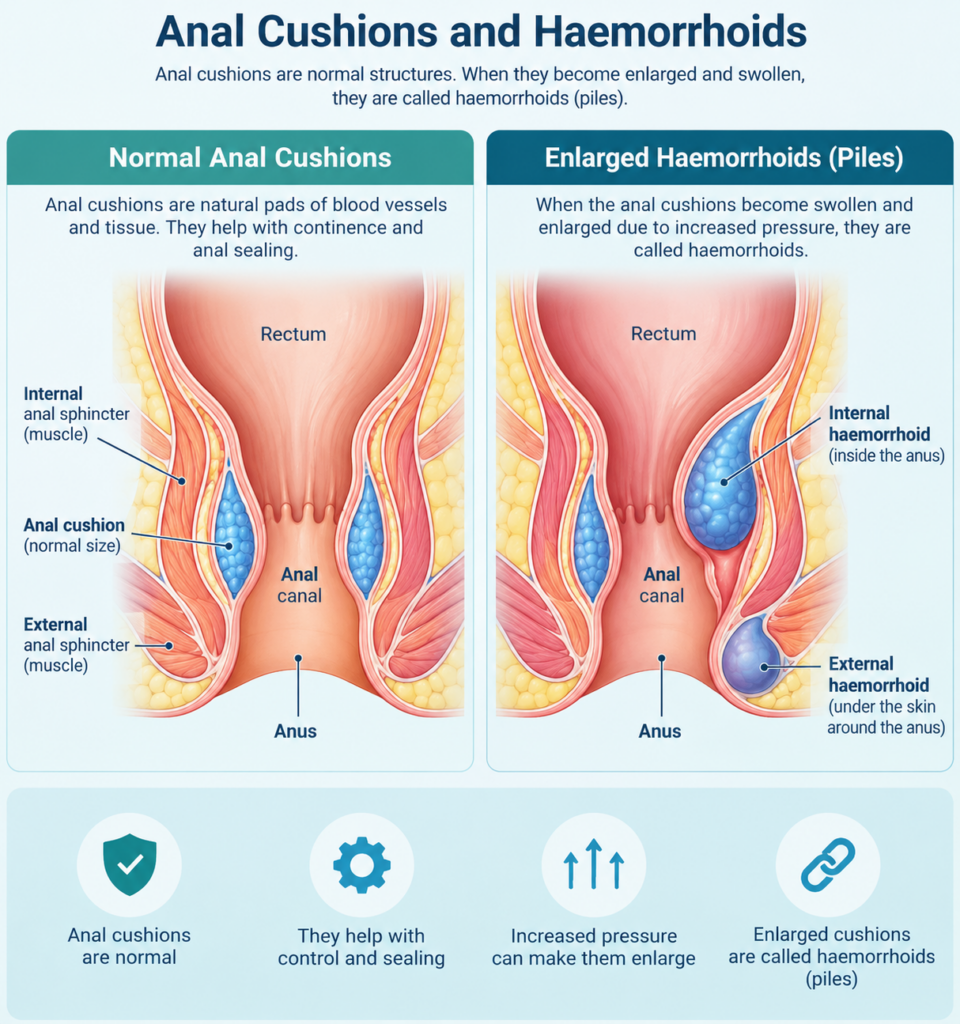
Enlarged haemorrhoidal tissue may cause bleeding, itching or a lump during stools. Many patients respond to fibre, fluids and better bowel habits.
Bleeding during stools, sharp anal pain or recurrent discharge can have different causes. Some conditions improve with medicines and bowel-habit changes; others require a procedure. Laser-assisted surgery is an option in selected cases—not a treatment for everyone.

WHEN TO SEEK HELP URGENTLY
Seek urgent medical assessment for heavy or ongoing rectal bleeding, fainting, severe dizziness, rapidly worsening anal pain or swelling, fever, or pus with feeling unwell. These symptoms may require urgent treatment and should not wait for a routine appointment.
These patterns are clues, not a self-diagnosis. An examination may be needed to find the cause.
Piles are one possible cause, but bleeding may need additional investigation.
Understand bleeding →Especially during and after stools, sometimes with fresh red blood.
Understand fissures →An anal abscess or fistula may need surgical assessment.
Understand fistulas →May occur with internal piles or other anorectal conditions.
Understand piles →Understanding the differences helps patients ask the right questions before choosing a procedure.

Enlarged haemorrhoidal tissue may cause bleeding, itching or a lump during stools. Many patients respond to fibre, fluids and better bowel habits.

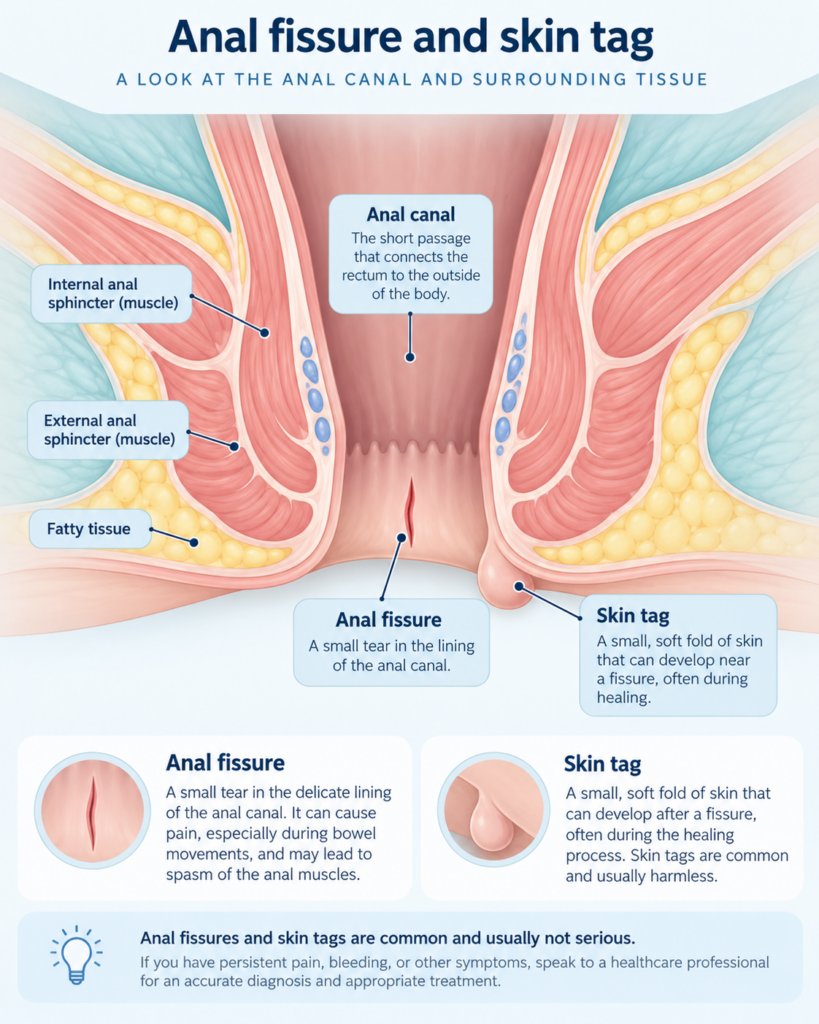
A tear in the anal lining can cause marked pain during stools. Fibre, stool softening and prescribed topical treatment are usually considered first.

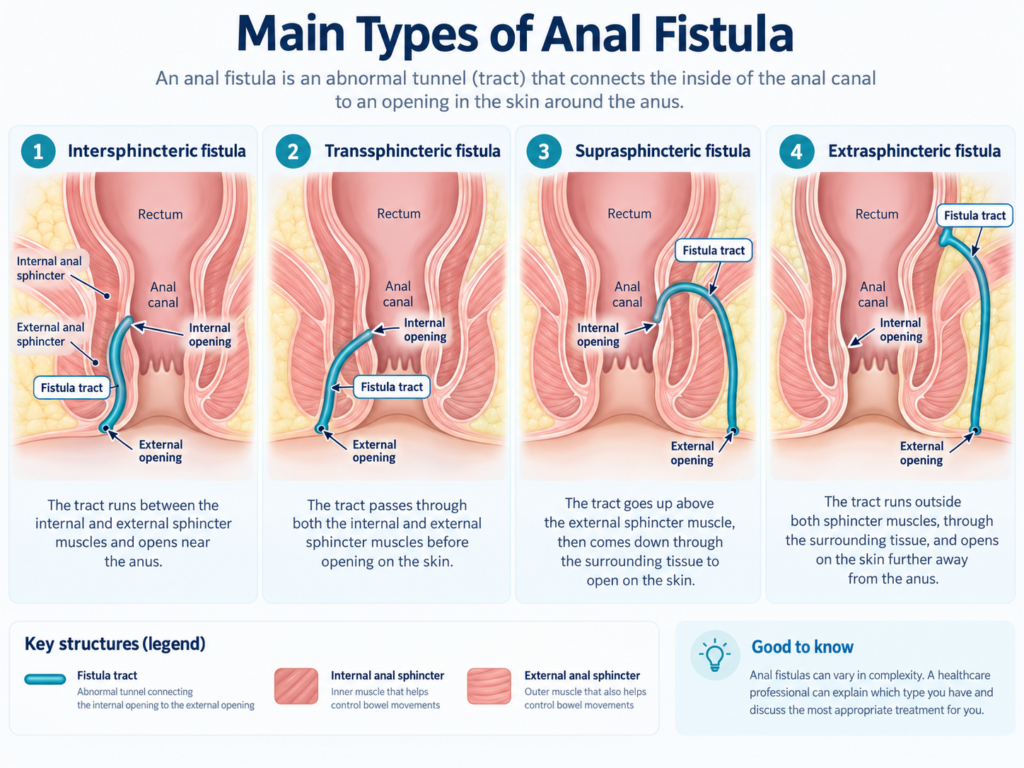
An abnormal tract between the anal canal and skin can cause recurrent discharge or abscesses. Mapping the tract and protecting sphincter function are central.

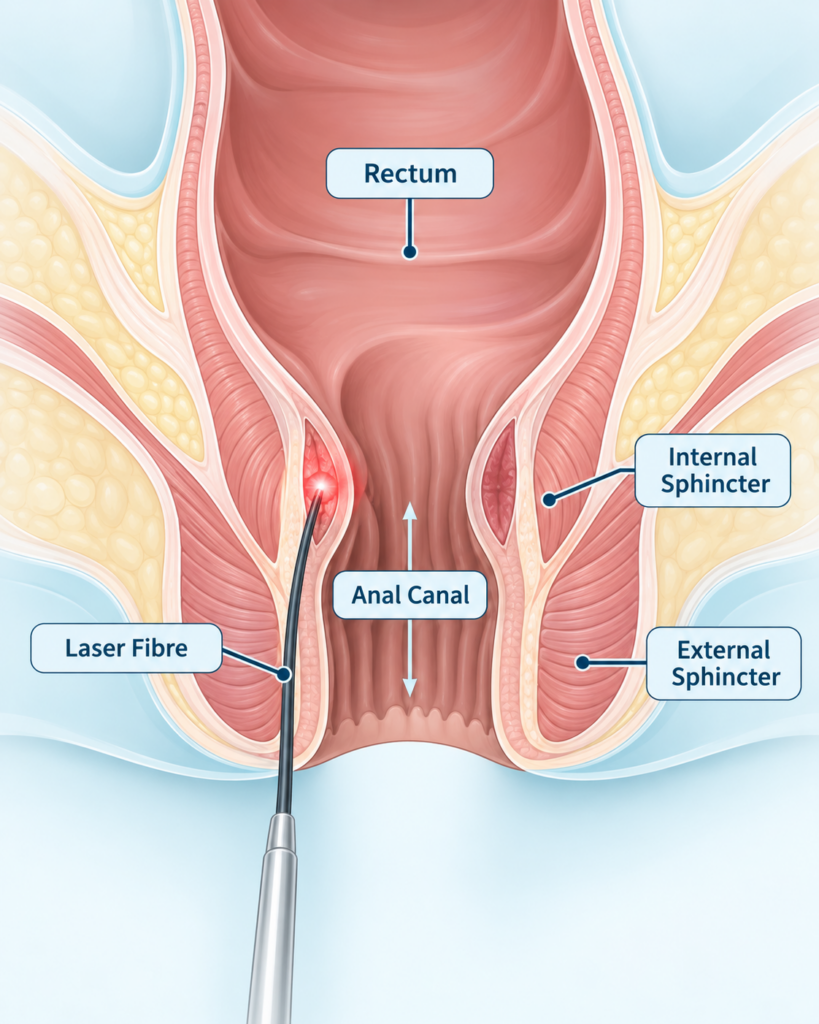
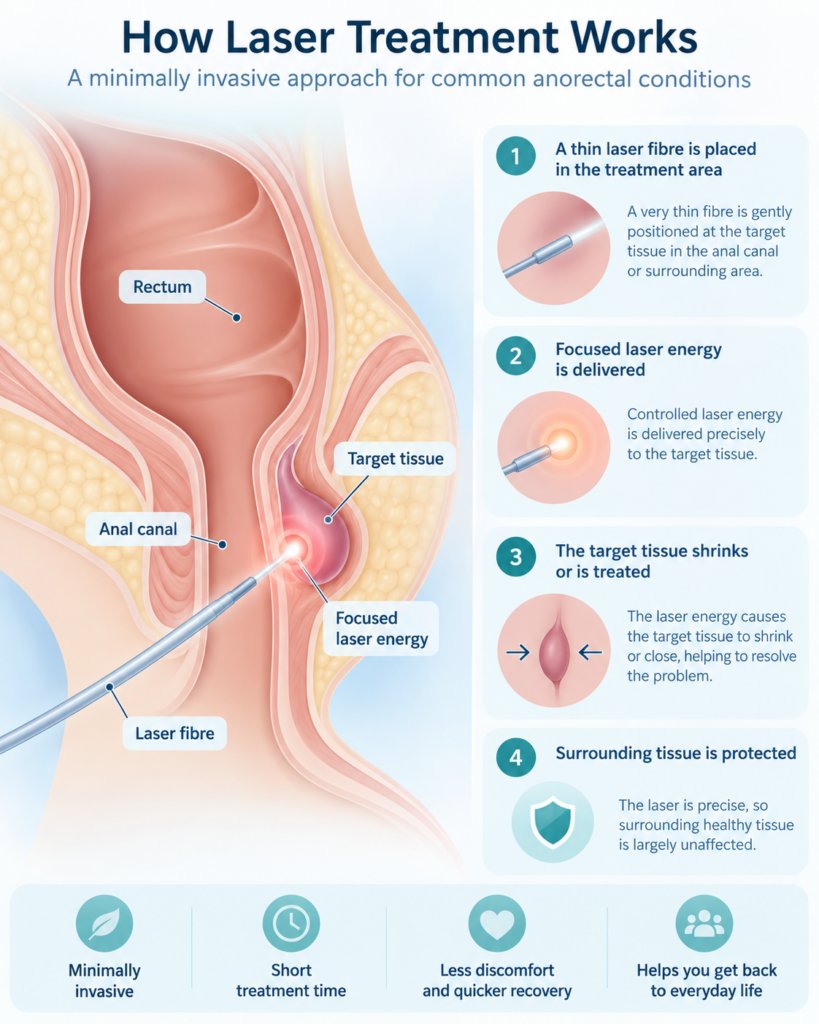
Laser proctology refers to using laser energy as part of a procedure for selected anorectal conditions. Its role is different for each diagnosis:
Haemorrhoids: selected laser procedures aim to reduce enlarged haemorrhoidal tissue or its blood supply. Large external components or pronounced prolapse may need a different operation.
Fistula: a thin laser fibre may be used to treat a suitable tract in a sphincter-preserving approach. Long-term healing and recurrence outcomes are less certain than for some established operations.
Fissure: first-line care generally does not involve laser. If treatment fails, standard medical or surgical options are considered according to sphincter function and risk factors.
Medical management, office procedures and conventional operations remain important. Each has different indications, benefits and trade-offs.
| Condition | Usually considered first | When a procedure is needed | Laser considerations |
|---|---|---|---|
| Piles | Fibre, fluids, bowel habits; symptom management | Office banding for suitable internal piles; excisional treatment for selected advanced/mixed disease | A possible option for selected cases, but not a universal replacement for banding or excision |
| Anal fissure | Stool regulation, topical therapy and pain management | Botulinum toxin or appropriate surgery after assessment | Not an established routine first-line treatment |
| Anal fistula | Assessment of infection, tract anatomy and sphincter involvement | Fistulotomy, drainage/seton, LIFT, flap or other tailored surgery | FiLaC-type approaches for selected tracts; recurrence remains possible |
Fistula surgery needs special care to balance healing against continence risk. Active anal abscess generally requires prompt drainage rather than relying on a laser-only procedure.
Not everyone needs every investigation. The clinical findings determine the next step.
Bleeding, pain, discharge, bowel habits, previous procedures and relevant medications.
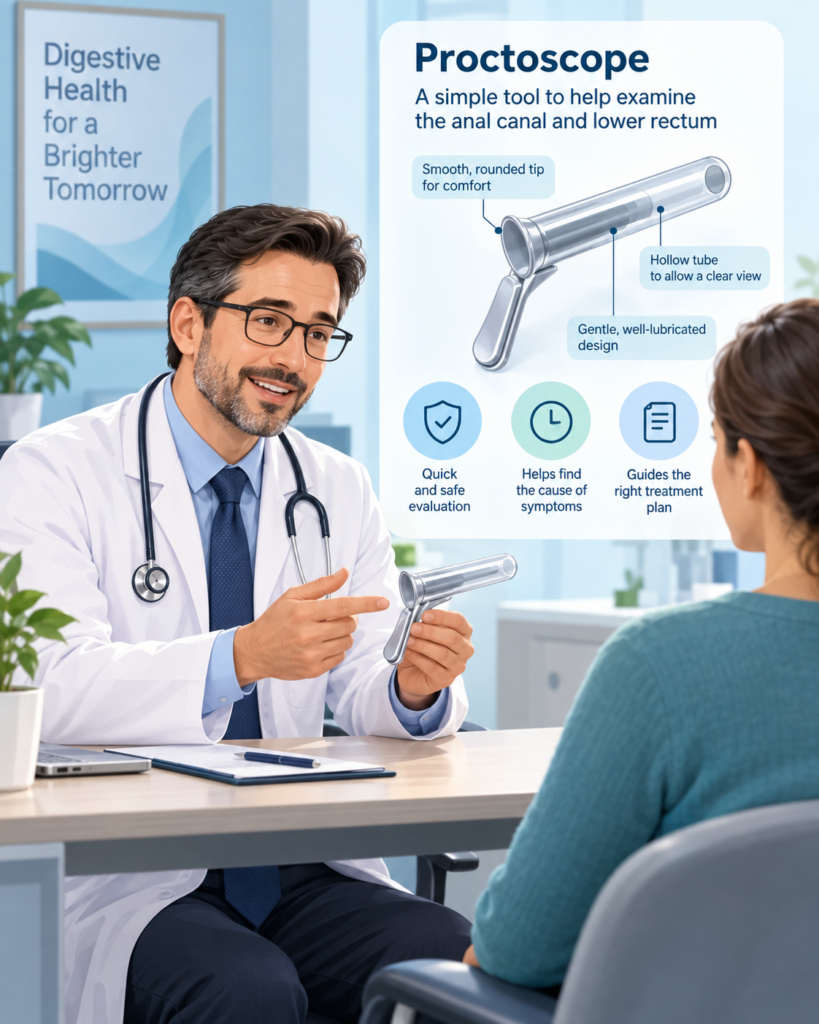
Inspection and, where suitable, digital rectal examination or proctoscopy.
MRI can help map complex or recurrent fistula; colonoscopy may be indicated for concerning or unexplained rectal bleeding.
Discuss expected outcomes, risks, alternatives, recovery and follow-up.

Potential advantages depend on the condition, chosen technique and individual patient—not the word “laser” alone.
Some techniques focus treatment on selected tissue or tracts.
A priority when choosing certain fistula procedures.
Depending on anatomy and whether other procedures are required.
Activity and time off work vary by procedure and patient.
All procedures carry risks, including pain, bleeding, infection, delayed healing, persistent symptoms or recurrence. Some fistula procedures also carry a continence risk. No treatment offers a guaranteed result.

Follow-up and aftercare should match the exact condition and procedure. Common advice may include:
Specific dressing, bathing and activity guidance varies substantially between piles, fissure and fistula procedures.

Consultant Surgeon · Laparoscopic & Bariatric Surgery
MBBS · MS (General Surgery) · FMAS · DMAS · SAGES (USA) · WALS (UK)
Care begins with understanding the symptoms and confirming the diagnosis. Where surgery is needed, the approach is selected to fit the condition, protect function and provide a clear explanation of recovery and alternatives.
Answers to help you prepare for an informed discussion with your surgeon.
No. Many patients improve with fibre, fluids and bowel-habit changes. Depending on symptoms and grade, office banding, excisional surgery or selected laser-assisted treatment may be discussed.
No procedure is guaranteed painless. Discomfort varies by condition, technique, anaesthesia and recovery. Ask about expected pain control for the specific treatment being offered.
No. Persistent or recurrent symptoms remain possible, and follow-up is important.
No. Most fissures are initially managed with stool regulation and medical therapy. Resistant chronic fissures may require botulinum toxin or selected surgery. A laser is not required routinely.
Some sphincter-preserving techniques, including LIFT, advancement flap or selected laser-based tract treatment, may be suitable. Their success and recurrence rates differ, and careful anatomy assessment is essential.
Antibiotics may be used for certain associated infections, but an established fistula usually needs a procedure. An abscess may require urgent drainage.
Not in every case. MRI is especially useful for selected complex, recurrent or difficult-to-map fistulas.
No. Colonoscopy is considered when clinical findings, age, symptoms, anaemia, screening history or other risk factors justify it. Bleeding should not automatically be attributed to piles.
Selected procedures may be done as day-care treatment. Suitability depends on the procedure, anaesthesia, health conditions and postoperative needs.
Recovery varies widely. A small office procedure and complex fistula surgery have very different recovery plans. Your surgeon can advise after determining the exact procedure.
Depending on the procedure, risks can include pain, bleeding, infection, delayed healing, recurrence and, with certain fistula operations, changes in bowel control. Discuss the risks of the proposed technique before consenting.
Bring previous prescriptions, surgery/discharge papers, MRI or colonoscopy results if available, and a list of current medicines.
Book a confidential consultation to discuss your concerns and appropriate options. You do not need to share intimate symptoms over WhatsApp to request an appointment.
Shri Ramdev Healthcare Center · Shop No. 1, Golders Green Building No. 1, Holy Cross Road, IC Colony, Borivali West, Mumbai – 400103.
ASCRS haemorrhoids guidelines (2024) · ASCRS anal fissure guidelines (2023) · ASCRS anal fistula guidelines (2022)