
Fresh red blood
Blood on toilet paper, outside the stool or in the toilet bowl.
Blood on tissue, in the toilet bowl or mixed with stool can happen for different reasons. Piles and anal fissures are common causes—but not all rectal bleeding is due to piles. The right treatment begins with finding the cause.
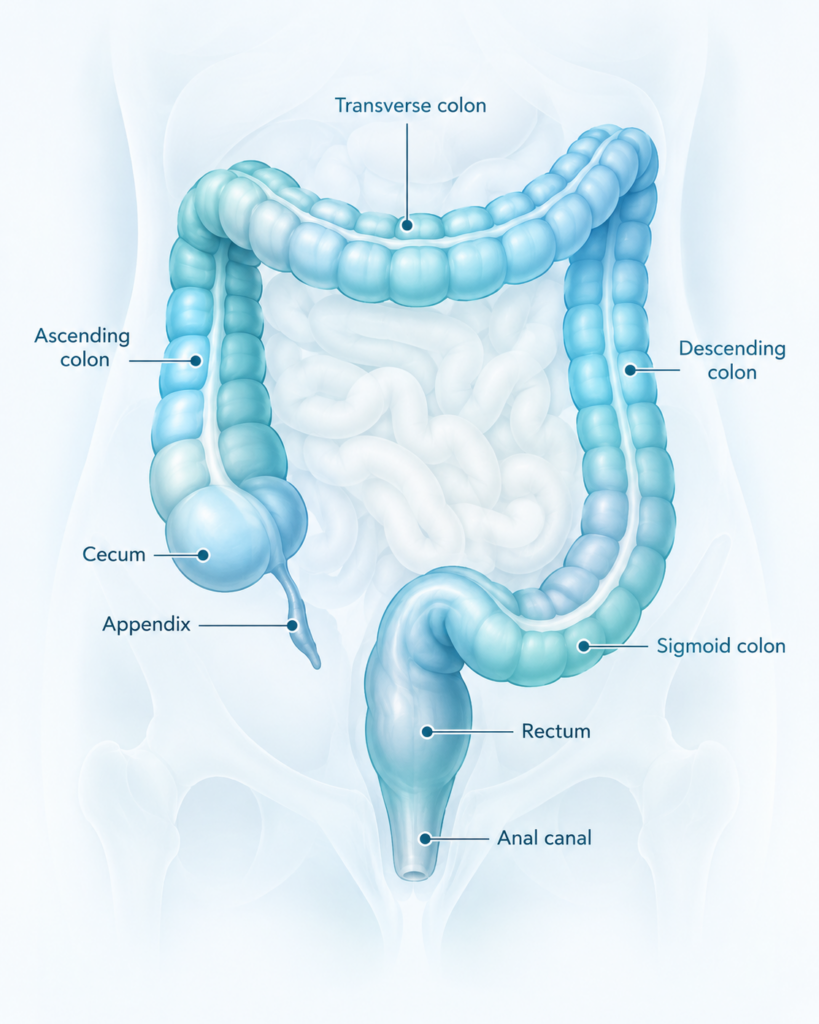
IMPORTANT SAFETY INFORMATION
Go to an emergency department now for heavy or ongoing bleeding, large clots, fainting or severe dizziness, marked weakness, or bleeding with chest pain or breathlessness. Black tarry stools, dark red stools or bloody diarrhoea also need prompt medical assessment.
This website is not an emergency response service. Do not use the appointment form for urgent symptoms.
These patterns can help describe your symptoms to your doctor. None can confirm a diagnosis on their own.
Blood on toilet paper, outside the stool or in the toilet bowl.
Sharp pain, burning or discomfort during and after a bowel movement.
Bleeding alongside mucus, diarrhoea, urgency or abdominal symptoms.
Bleeding with persistent changes in stool frequency or consistency.
Even a small amount of rectal bleeding may need clinical evaluation, particularly if it is recurrent or unexplained.
Some causes are common and treatable. Others require investigation, even when there is little or no pain.
Can cause fresh red bleeding, itching or prolapse. Internal piles may bleed without much pain.
Learn about pilesA small tear in the anal lining can cause sharp pain with passing stool and a streak of fresh blood.
Learn about fissuresProctitis, colitis or other intestinal conditions may cause blood, mucus and bowel urgency.
Explore bowel evaluationPolyps may cause bleeding but often have no symptoms. Selected polyps can be removed during colonoscopy.
About colonoscopyPersistent bleeding, unexplained weight loss, anaemia or bowel habit changes may need assessment for serious causes, including cancer.
When colonoscopy may helpRectal ulcers, diverticular bleeding and other conditions can also cause bleeding. Recurrent swelling or pus may suggest an associated fistula or abscess.
Anal swelling and discharge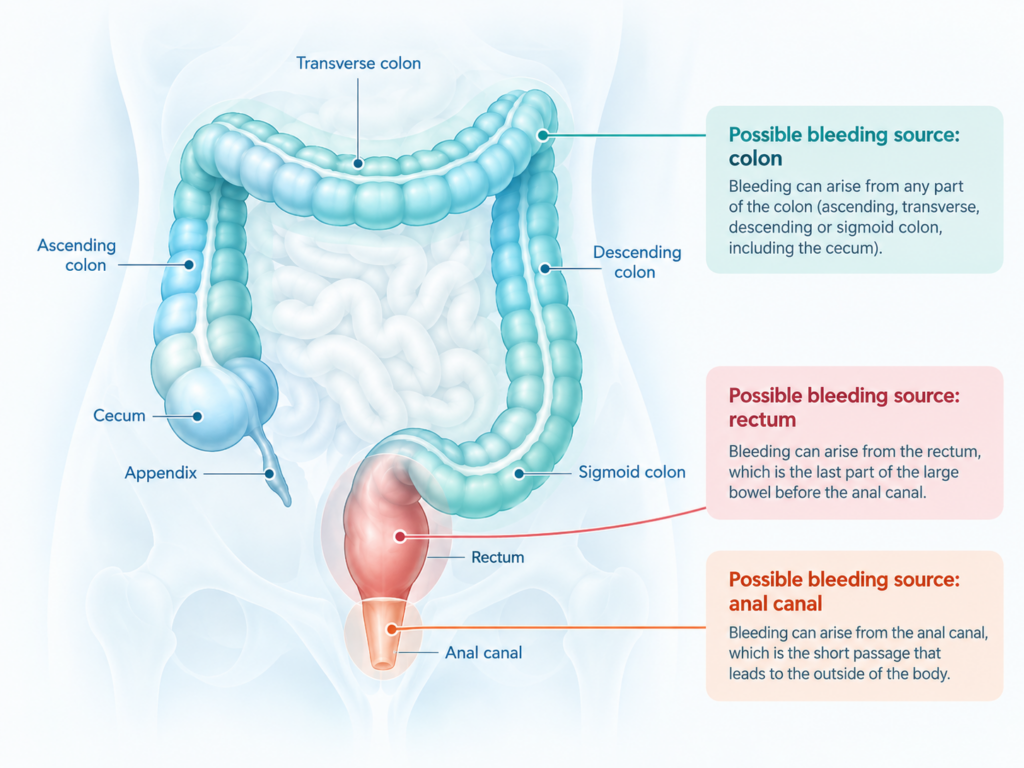 The appearance of blood alone does not reliably locate its source.
Bright red blood is often associated with bleeding near the anus or lower bowel, but can have other causes.
Darker red blood, blood mixed with stools or black tarry stools may suggest bleeding from a different part of the digestive tract and warrants prompt assessment.
The pattern, amount, associated symptoms, medicines and medical history help guide your doctor's evaluation.
How the cause is checkedNot everybody needs every test. The examination is chosen according to the history, severity and individual risk factors.
Colour and amount of blood, pain, constipation, diarrhoea, medication use, family history and warning symptoms.
Examination may help identify a fissure, external haemorrhoid, swelling or other local abnormality.
A short instrument may be used to examine the anal canal or lower rectum when appropriate.
Blood tests, flexible sigmoidoscopy or colonoscopy may be recommended depending on the clinical findings.
Treatment follows the identified cause—sometimes dietary or medical measures, sometimes a procedure.

Not everyone with rectal bleeding needs a colonoscopy. A doctor may recommend it for persistent or unexplained bleeding, anaemia, concerning bowel changes, certain risk factors or when findings suggest a cause inside the colon.
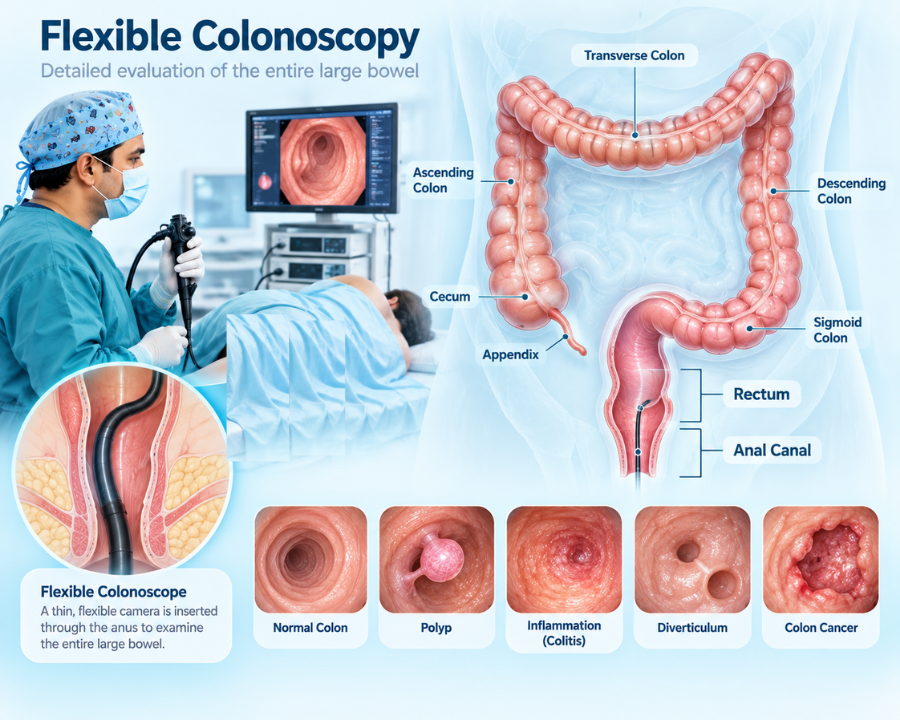
A colonoscopy uses a flexible camera to examine the colon and rectum. It can help identify inflammation, polyps and other abnormalities; biopsy or polyp removal may be possible when indicated.
The next step is individualized. Not every case requires surgery, and laser procedures are suitable only for selected conditions and patients.
Dietary measures, medicines, office procedures or surgery may be considered based on the findings.
Piles treatment options → 02Many fissures respond to stool regulation and topical treatment; persistent cases may need a procedure.
Anal fissure care → 03Further examination, biopsy or polyp removal may be advised depending on the suspected cause.
Colonoscopy guide →Laser-assisted treatment may be an option for selected patients after confirming the diagnosis.
Do not stop prescribed blood thinners on your own; speak to the prescribing clinician.
Medication list, previous prescriptions, laboratory reports, colonoscopy reports and any relevant discharge summaries.
What is the likely source? Do I need investigations? What are the alternatives? When should I follow up?
Request an appointment
MBBS · MS (General Surgery) · FMAS · DMAS · SAGES (USA) · WALS (UK)
Consultant Surgeon with a practice focus on laparoscopic and bariatric surgery, laser proctology, upper GI endoscopy and colonoscopy.
For rectal bleeding, the priority is to identify its cause and discuss appropriate tests and treatment options—including non-surgical care wherever suitable.
Consult Dr Jadhav ↗Clear answers to common concerns, without assuming a diagnosis.
No. Piles are one possible cause, but anal fissures, inflammation, polyps and other conditions can also cause bright red bleeding. Assessment helps identify the source.
Yes. An anal fissure can cause a small amount of fresh bleeding, often with sharp pain during bowel movements.
Not always, but painless bleeding should not automatically be assumed to be harmless. The need for investigation depends on the history, examination and individual risk factors.
Not everyone does. Colonoscopy may be recommended if bleeding is recurrent or unexplained, or if there are risk factors, anaemia, weight loss or persistent bowel changes.
Yes, although many cases have non-cancerous causes. Persistent or unexplained bleeding should be evaluated rather than attributed to piles without examination.
Not necessarily. Treatment depends on the diagnosed cause. Some conditions respond to lifestyle or medical management, while selected cases require a procedure.
Even if bleeding settles, discuss unexplained, recurrent or concerning bleeding with a clinician. Seek urgent care for heavy bleeding, faintness or black tarry stools.
Previous prescriptions, medicine lists, blood reports, colonoscopy findings and information about when and how the bleeding occurs.
Request an appointment to discuss your symptoms, examination and whether further investigation is appropriate.